
Electrical Appliances Power Consumption: A Comprehensive Guide
Accessing detailed charts, often in PDF format, reveals typical energy usage for various appliances, aiding informed decisions regarding efficiency and cost savings.
Understanding how much electricity your appliances consume is the first step towards managing your energy bills and reducing your environmental footprint. Electrical appliances power consumption charts, frequently available as PDF downloads from energy providers and government websites, provide valuable insights into the energy demands of common household items.
These charts typically list appliances – from refrigerators and washing machines to televisions and computers – alongside their average wattage, daily energy usage, and estimated annual costs. Utilizing these resources allows homeowners to identify energy hogs and make informed choices about appliance upgrades or usage habits.
Furthermore, these PDF resources often categorize appliances by energy efficiency ratings (like Energy Star), helping consumers select more sustainable options. Accessing and interpreting these charts empowers individuals to take control of their energy consumption and contribute to a more sustainable future.
Why Understanding Power Consumption Matters
Knowing your appliance power consumption isn’t just about saving money; it’s about responsible energy management. Electrical appliances power consumption charts, often found as downloadable PDF documents, are crucial tools for this understanding. They reveal hidden costs and highlight opportunities for improvement.
By analyzing these charts, you can pinpoint appliances that significantly contribute to your electricity bill. This knowledge empowers you to make informed decisions – whether it’s replacing an old, inefficient model with an Energy Star certified alternative, or simply adjusting your usage patterns.
These PDF charts also facilitate better budgeting and financial planning. Moreover, understanding energy usage promotes environmental awareness, encouraging a shift towards more sustainable living practices and reducing your carbon footprint. Informed consumers are key to a greener future.
Cost Savings & Budgeting
Detailed electrical appliances power consumption charts, readily available as PDF resources, are invaluable for accurate budgeting. They translate wattage into estimated monthly or yearly costs, providing a clear financial picture. Knowing precisely how much each appliance contributes to your bill allows for targeted reductions.
For example, identifying a high-usage appliance through a PDF chart might prompt you to use it less frequently, or to replace it with a more energy-efficient model. This proactive approach directly impacts your savings.
Furthermore, these charts help anticipate seasonal fluctuations in energy costs, allowing for better financial planning. By understanding your energy footprint, you can create a realistic budget and avoid unexpected high bills, ultimately gaining greater control over your finances and promoting responsible spending.
Environmental Impact & Sustainability
Electrical appliances power consumption charts, often found in PDF format, illuminate the environmental consequences of our energy choices. Understanding an appliance’s energy usage reveals its carbon footprint – the amount of greenhouse gases emitted during its operation. This knowledge empowers consumers to make sustainable decisions.
By referencing these PDF charts, individuals can identify energy-intensive appliances and explore eco-friendly alternatives. Reducing consumption lowers demand on power plants, lessening pollution and conserving natural resources.
Furthermore, these resources promote a mindful approach to energy use, encouraging responsible habits like unplugging devices when not in use; Embracing energy efficiency, guided by these charts, contributes to a healthier planet and a more sustainable future for generations to come, fostering environmental stewardship.
Home Electrical System Capacity
Electrical appliances power consumption charts, frequently available as PDF downloads, are crucial for assessing your home’s electrical capacity. These charts detail the wattage requirements of various devices, allowing homeowners to calculate total load. Knowing this prevents overloads, which can trip breakers or even cause electrical fires.
Reviewing PDF resources helps determine if your electrical panel can handle the combined power draw of all intended appliances, especially when adding new high-wattage items. Understanding capacity is vital before installing major appliances like electric vehicle chargers or central air conditioning.
If your system is nearing its limit, consulting a qualified electrician is essential. They can advise on upgrades, such as panel replacements or dedicated circuits, ensuring safe and reliable power distribution throughout your home, guided by appliance consumption data.
Key Terms & Units of Measurement
Electrical appliances power consumption charts, often found as PDF documents, utilize specific terminology for clarity. Understanding these terms is key to interpreting the data effectively. Charts commonly display wattage (W), kilowatts (kW), volt-amps (VA), and power factor – all crucial for assessing energy usage.
PDF resources will define these units, explaining how they relate to appliance energy demands. Wattage represents instantaneous power, while kilowatts scale this for larger appliances. Volt-amps indicate apparent power, and power factor reveals how efficiently that power is utilized.
Familiarizing yourself with these definitions, as presented in the charts, allows for accurate comparisons between appliances and informed decisions about energy conservation, ultimately optimizing your home’s power consumption.
Watts (W) ⏤ Instantaneous Power
Watts (W) represent the instantaneous power an appliance consumes at any given moment, a fundamental metric detailed in electrical appliances power consumption charts (often in PDF format). These charts display wattage for various appliances during operation, providing a snapshot of their energy demand.
Understanding wattage is crucial for calculating energy costs; higher wattage equates to greater energy use. PDF resources often show wattage ranges, as appliance power fluctuates based on settings (e.g., a dimmer switch on a lamp). Charts help identify energy-intensive appliances.
By comparing wattage values, you can prioritize energy-saving upgrades. For example, replacing a high-wattage incandescent bulb with a low-wattage LED significantly reduces instantaneous power consumption, as clearly illustrated within these charts.
Kilowatts (kW) ⏤ Larger Power Units
Kilowatts (kW) are simply 1,000 watts, a larger unit used for measuring the power consumption of high-demand appliances – information readily available in electrical appliances power consumption charts (often in PDF format). These charts frequently utilize kW to represent the total power draw of devices like electric heaters, air conditioners, and ovens.
Using kW simplifies calculations for larger energy users. Utility bills often report energy usage in kilowatt-hours (kWh). PDF resources detailing appliance power consumption commonly present data in kW to align with billing practices.
Charts displaying kW ratings allow for quick assessment of an appliance’s overall energy impact. Identifying appliances with high kW demands is the first step towards reducing your energy footprint and lowering electricity bills, as shown in detailed charts.
Volt-Amps (VA) ⏤ Apparent Power
Volt-Amps (VA) represent the total power an appliance appears to consume, considering both active (watts) and reactive power. While watts measure actual work done, VA is crucial for assessing the load on your electrical system – details often found within electrical appliances power consumption charts (typically in PDF format).
Many appliances, especially those with motors (like refrigerators or washing machines), draw reactive power. PDF resources frequently list VA ratings alongside wattage, providing a more complete picture of energy demands. Understanding VA helps prevent overloading circuits.
Charts displaying VA are particularly useful when calculating the capacity of backup power systems (like generators). A higher VA rating indicates a greater demand on the power supply, as detailed in comprehensive appliance charts.
Power Factor ⎼ Efficiency of Power Usage
Power Factor (PF) signifies how effectively an appliance utilizes electrical power; it’s the ratio of real power (watts) to apparent power (VA). A PF of 1.0 indicates perfect efficiency, while lower values suggest wasted energy due to reactive power. Electrical appliances power consumption charts (often available as PDF downloads) frequently include PF data.
Appliances with inductive loads – motors, transformers – typically have lower PF values. PDF resources detailing appliance specifications will often list the PF, allowing you to compare efficiency. Improving PF reduces strain on the electrical grid and lowers energy bills.
Understanding PF, alongside wattage and VA, provides a holistic view of an appliance’s energy performance, as presented in detailed consumption guides.
Common Household Appliances & Their Power Usage
Comprehensive electrical appliances power consumption charts (available in PDF format) are invaluable for understanding energy demands. These charts categorize appliances, detailing typical wattage ranges during operation and standby modes. Examining these PDF resources reveals significant variations; a refrigerator consumes far less than an oven.
Charts often break down usage by appliance type – kitchen, laundry, entertainment – providing a clear overview. PDF guides highlight energy-efficient models and their corresponding lower consumption rates. Comparing appliances using these charts empowers informed purchasing decisions.
Accessing these PDF documents allows homeowners to pinpoint energy hogs and implement strategies for reduction, ultimately lowering electricity bills and environmental impact.
Kitchen Appliances
Detailed electrical appliances power consumption charts, frequently found as PDF downloads, are particularly useful for kitchen appliances due to their diverse energy needs. These PDF resources showcase the wattage ranges of refrigerators, ovens, microwaves, and dishwashers, both during active use and standby.
Analyzing these charts reveals that ovens and stovetops typically have the highest consumption, especially during baking or boiling. Refrigerators, while running constantly, consume less overall. PDF guides often compare models, highlighting energy-star certified options.
Understanding these figures, presented in PDF format, allows for strategic appliance usage and informed purchasing decisions, leading to significant energy savings within the kitchen.
Refrigerator & Freezer
Comprehensive electrical appliances power consumption charts, often available as PDF documents, provide crucial data for refrigerators and freezers. These PDF resources detail the average wattage used by different types – top freezer, bottom freezer, side-by-side, and chest freezers – revealing significant variations.
Older models generally consume considerably more energy than newer, Energy Star-certified units, a key insight found within these PDF guides. Charts illustrate how factors like size, features (ice makers, water dispensers), and door opening frequency impact energy usage.
PDF analysis shows refrigerators run cyclically, while freezers maintain consistent power draw. Understanding these patterns, via detailed PDF charts, enables optimized temperature settings and informed replacement choices for substantial savings.
Oven & Stovetop
Electrical appliances power consumption charts, frequently distributed as PDF files, are invaluable for understanding oven and stovetop energy demands. These PDF resources categorize usage by appliance type: electric coil, smooth-top, induction, and gas (though gas usage is measured in BTU, charts often provide equivalent kWh).
PDF data reveals ovens consume significant power during preheating and baking, with convection ovens potentially using slightly more. Stovetops vary greatly; electric coil elements are generally less efficient than induction.
Detailed PDF charts illustrate how cooking time, temperature settings, and pot/pan material influence energy consumption. Analyzing these PDF documents helps identify energy-saving cooking habits, like utilizing residual heat and matching pot size to burner size, ultimately reducing electricity bills.
Microwave
Electrical appliances power consumption charts, often available as PDF downloads, demonstrate microwaves are relatively energy-efficient for quick cooking tasks. These PDF resources typically list wattage ranges – from 600W to 1200W – and estimate energy use based on cooking time and power level.
PDF data highlights that while peak power draw is high during operation, the duration of use is short, resulting in lower overall energy consumption compared to ovens. Charts often differentiate between cooking and standby power (phantom load).
Analyzing PDF charts reveals that reheating food consumes less energy than initial cooking. Understanding these figures, presented in convenient PDF format, empowers users to optimize microwave usage and minimize energy waste, contributing to lower electricity costs.
Dishwasher
Electrical appliances power consumption charts, frequently found as downloadable PDF documents, illustrate dishwashers’ energy usage varies significantly based on cycle selection and features. These PDF resources typically detail wattage for washing and drying cycles, often ranging from 1.5kW to 2.4kW during active operation.
PDF data often compares energy consumption between standard, eco, and quick wash cycles, demonstrating substantial savings with energy-efficient settings. Charts also highlight the impact of heated drying versus air drying on overall energy use.
Reviewing these PDF charts allows consumers to understand the energy cost per wash and identify models with lower consumption ratings. Utilizing this information, readily available in PDF format, promotes responsible appliance usage and reduces household energy bills.
Laundry Room Appliances
Electrical appliances power consumption charts, commonly distributed as PDF files, provide crucial data for understanding laundry appliance energy use. These PDF resources detail the wattage of both washing machines and dryers, showcasing variations based on cycle settings and features.
Washing machines, as detailed in PDF charts, typically consume between 300W and 800W during operation, with higher usage during the heating of water. Dryers, conversely, are significant energy consumers, often ranging from 2kW to 5kW, particularly for electric models.
PDF documents often compare energy usage between different dryer settings (e.g., high heat, low heat, air dry) and highlight the benefits of energy-efficient models. Accessing these PDF charts empowers consumers to make informed decisions and minimize energy waste.
Washing Machine
Electrical appliances power consumption charts, frequently available as PDF downloads, offer detailed insights into washing machine energy usage. These PDF resources break down power consumption by wash cycle – including cold, warm, and hot water settings – and spin speed.
Typical washing machines consume between 100W and 500W during a standard cycle, though this varies significantly based on model and features. Hot water usage dramatically increases energy consumption, as highlighted in many PDF guides. Front-load washers generally use less energy than top-load models, a detail often presented in comparative PDF charts.
PDF documents also illustrate the impact of features like steam cycles and sanitization options on overall power draw. Utilizing these PDF resources allows consumers to understand their washing machine’s energy footprint and optimize usage.
Dryer
Electrical appliances power consumption charts, often found as downloadable PDF documents, provide crucial data regarding dryer energy usage. These PDF resources typically categorize consumption by dryer type – electric versus gas – and drying cycle settings, like low, medium, and high heat.
Electric dryers are notably energy-intensive, consuming between 2,000W and 6,000W per cycle, as detailed in many PDF guides. Gas dryers, while using less electricity for operation, still require energy for controls and ventilation, information readily available in comparative PDF charts.
PDF documents also highlight the impact of sensor drying and moisture control features on energy efficiency. Understanding these details, presented in accessible PDF formats, empowers consumers to minimize energy waste and reduce utility bills.
Entertainment & Computing Devices
Electrical appliances power consumption charts, frequently available as PDF downloads, illustrate the varying energy demands of entertainment and computing devices. These PDF resources categorize devices like televisions, gaming consoles, and computers, detailing their active and standby power usage.
PDF guides reveal that modern televisions, especially larger screen sizes, can consume between 50W and 300W during operation. Gaming consoles, particularly high-end models, often exceed this, with peak usage reaching 150W-400W, as shown in detailed PDF analyses.
Computers and monitors exhibit a wide range of consumption, dependent on specifications. Comprehensive PDF charts break down desktop versus laptop power needs, offering insights for optimizing energy efficiency. Accessing these PDF resources aids informed purchasing and usage decisions.
Television
Electrical appliances power consumption charts, often distributed as PDF documents, provide crucial data regarding television energy usage. These PDF resources categorize televisions by type – LCD, LED, OLED – and screen size, detailing typical wattage consumption during operation and standby modes.
A typical PDF chart reveals that older LCD televisions can consume significantly more power than newer LED or OLED models. Screen size is a major factor; a 55-inch LED TV might use 80-150W, while a 65-inch OLED could range from 100-200W, as detailed in comprehensive PDF guides.
PDF analyses also highlight the impact of features like brightness and HDR. Utilizing these PDF resources empowers consumers to understand their television’s energy footprint and make informed choices for energy conservation.
Gaming Consoles
Electrical appliances power consumption charts, frequently available as PDF downloads, offer valuable insights into the energy demands of modern gaming consoles. These PDF resources typically differentiate between console generations – PlayStation, Xbox, Nintendo – and usage states: gaming, standby, and software updates.
A detailed PDF will show that newer consoles, while more powerful, often exhibit improved energy efficiency compared to their predecessors. During active gameplay, a current-generation console might consume 150-250W, as outlined in many PDF guides. Standby mode, however, can still draw 10-20W.
PDF analyses also consider the impact of external accessories and game downloads on overall power usage. Accessing these PDF charts allows gamers to understand and potentially reduce their console’s energy footprint.
Computers & Monitors
Electrical appliances power consumption charts, often distributed as PDF documents, provide a breakdown of energy usage for desktop computers, laptops, and monitors. These PDF resources categorize consumption by component – CPU, GPU, storage – and operational mode: idle, typical use, and maximum load.
A typical desktop computer can range from 60W (idle) to 300W+ (gaming/intensive tasks), as detailed in many PDF guides. Laptops generally consume less, between 20W and 80W. Monitors vary significantly; an older LCD might use 30W, while a modern 4K LED monitor could draw 80-150W, according to PDF analyses.
PDF charts also highlight the impact of peripherals like printers and external drives. Utilizing these PDF resources empowers users to optimize their computer setup for energy efficiency and cost savings.
Standby Power & Phantom Loads
Electrical appliances power consumption charts, frequently available as PDF downloads, illuminate the often-overlooked issue of standby power – also known as phantom loads. These PDF resources detail how devices continue to draw energy even when switched “off,” due to internal circuitry remaining active for features like remote control responsiveness or quick start-up.
PDF analyses reveal that seemingly insignificant standby consumption across multiple devices can accumulate into a substantial portion of a household’s energy bill. Common culprits, as shown in these PDF guides, include televisions, game consoles, and chargers. Charts often quantify standby power in watts per year.
Accessing these PDF documents helps identify energy vampires and encourages practices like unplugging devices or using power strips to eliminate phantom loads, promoting energy conservation.
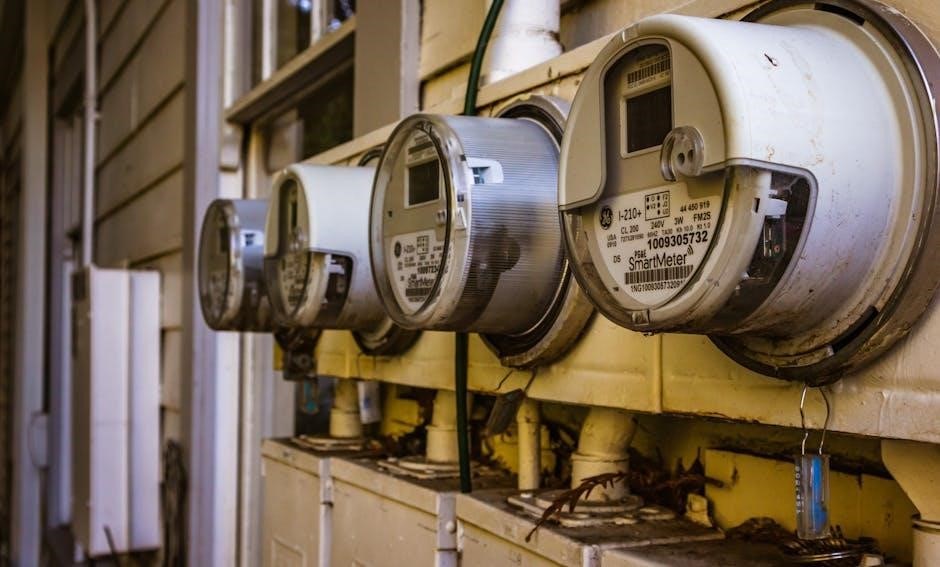
Accessing & Utilizing Power Consumption Charts (PDF Resources)
Electrical appliances power consumption charts, widely distributed as PDF documents, are invaluable tools for understanding energy usage. Government energy agencies, appliance manufacturers, and consumer organizations frequently publish these PDF resources online. A simple web search for “appliance energy consumption chart PDF” yields numerous options.
These PDF charts typically categorize appliances, listing their average wattage, estimated annual energy consumption (in kilowatt-hours), and associated costs. Utilizing these PDFs involves comparing your appliance’s specifications to the chart data.
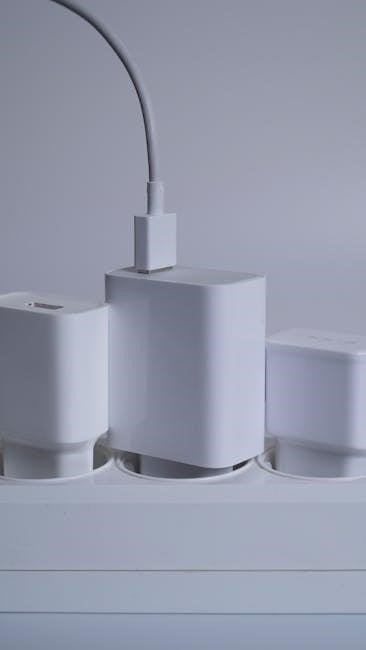
Understanding the chart’s methodology – whether it represents average use or specific settings – is crucial. PDF guides often include tips for interpreting the data and making informed purchasing decisions to minimize energy waste.
Tools for Measuring Appliance Power Consumption
Electrical appliances power consumption charts (often found as PDFs) provide estimates, but real-world usage varies. For precise measurements, dedicated tools are essential. While a PDF chart offers a baseline, these tools reveal your specific appliance’s energy draw.
These tools range from simple plug-in power meters, which display instantaneous wattage and cumulative energy use, to more sophisticated whole-house energy monitors. These monitors provide detailed breakdowns of energy consumption by appliance circuit.
Comparing data from these tools with information found in PDF appliance energy guides allows for accurate assessment of efficiency. Discrepancies can indicate appliance malfunction or inefficient usage patterns, prompting corrective action and potential savings.
Plug-in Power Meters
Plug-in power meters are a cost-effective way to verify the data presented in electrical appliances power consumption chart PDFs. These compact devices simply plug into a standard outlet, and the appliance then plugs into the meter. They display real-time wattage, voltage, amperage, and often, cumulative kilowatt-hours (kWh) used.
This allows you to directly measure an appliance’s energy draw during operation and identify potential “energy vampires” – devices consuming power even when seemingly off. Comparing these readings against PDF chart estimates reveals accuracy.
Many models offer data logging capabilities, enabling long-term monitoring and analysis. This is particularly useful for appliances with variable usage patterns, providing a more comprehensive understanding of their energy footprint than a static PDF can offer.
Whole-House Energy Monitors
Whole-house energy monitors provide a broader perspective than individual appliance measurements, complementing information found in electrical appliances power consumption chart PDFs. These systems typically install in your electrical panel and track energy usage across your entire home in real-time.
Advanced models can disaggregate energy data, estimating the consumption of individual appliances without needing plug-in meters. This allows for verification of PDF-provided average values against your specific household usage.
By identifying baseline consumption and peak demand, these monitors help pinpoint areas for improvement. While not as precise as direct measurement, they offer a valuable overview and can confirm if your overall energy profile aligns with expectations based on PDF appliance consumption guides.